History
The history of Fasanenstraße 23
»Vom Nordpol nach Charlottenburg«
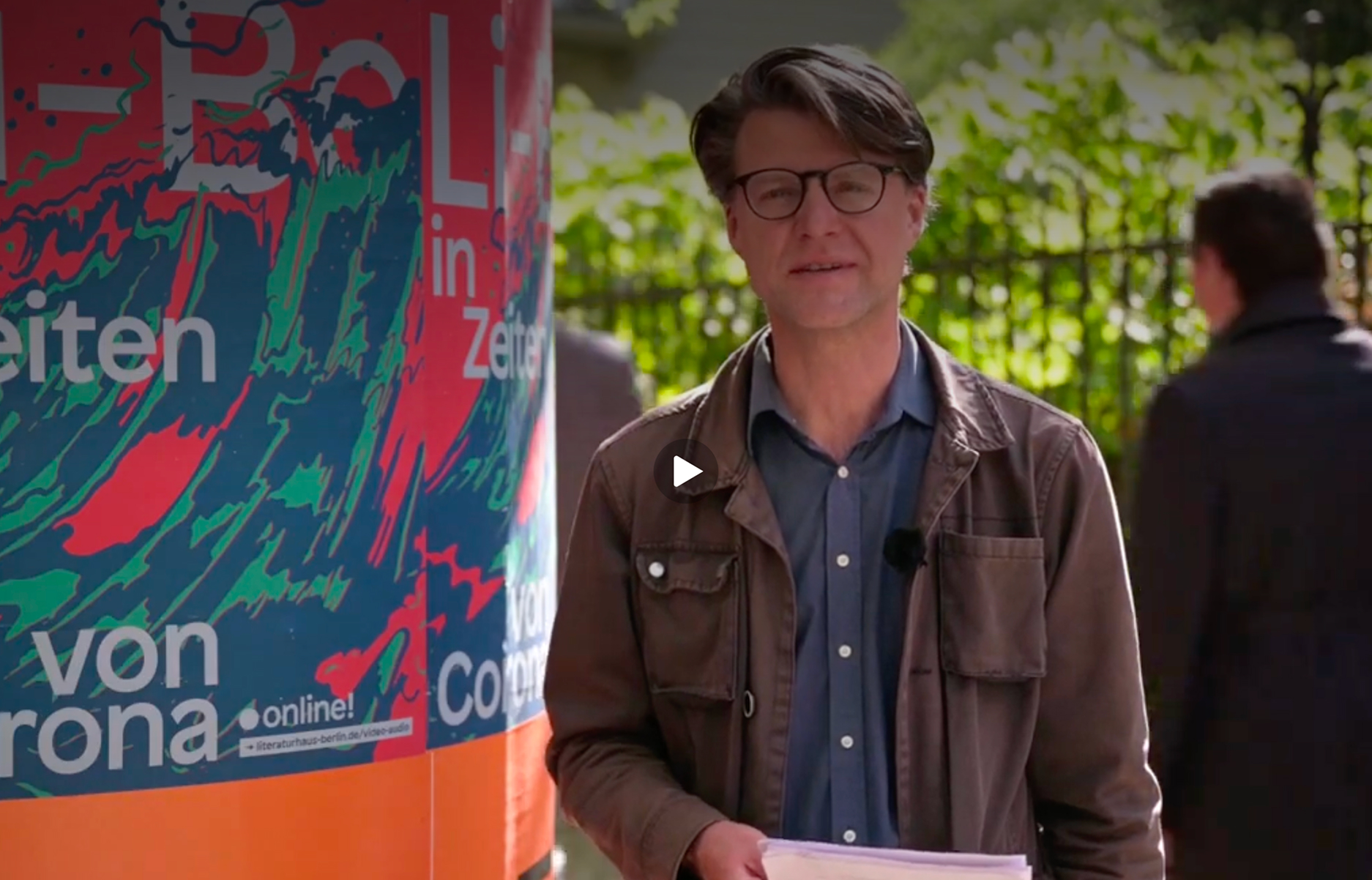
Join Sebastian Januszewski as he guides you through the history of the house on the tour »From the North Pole to Charlottenburg.«
1889–1916
Louise and Richard Hildebrandt
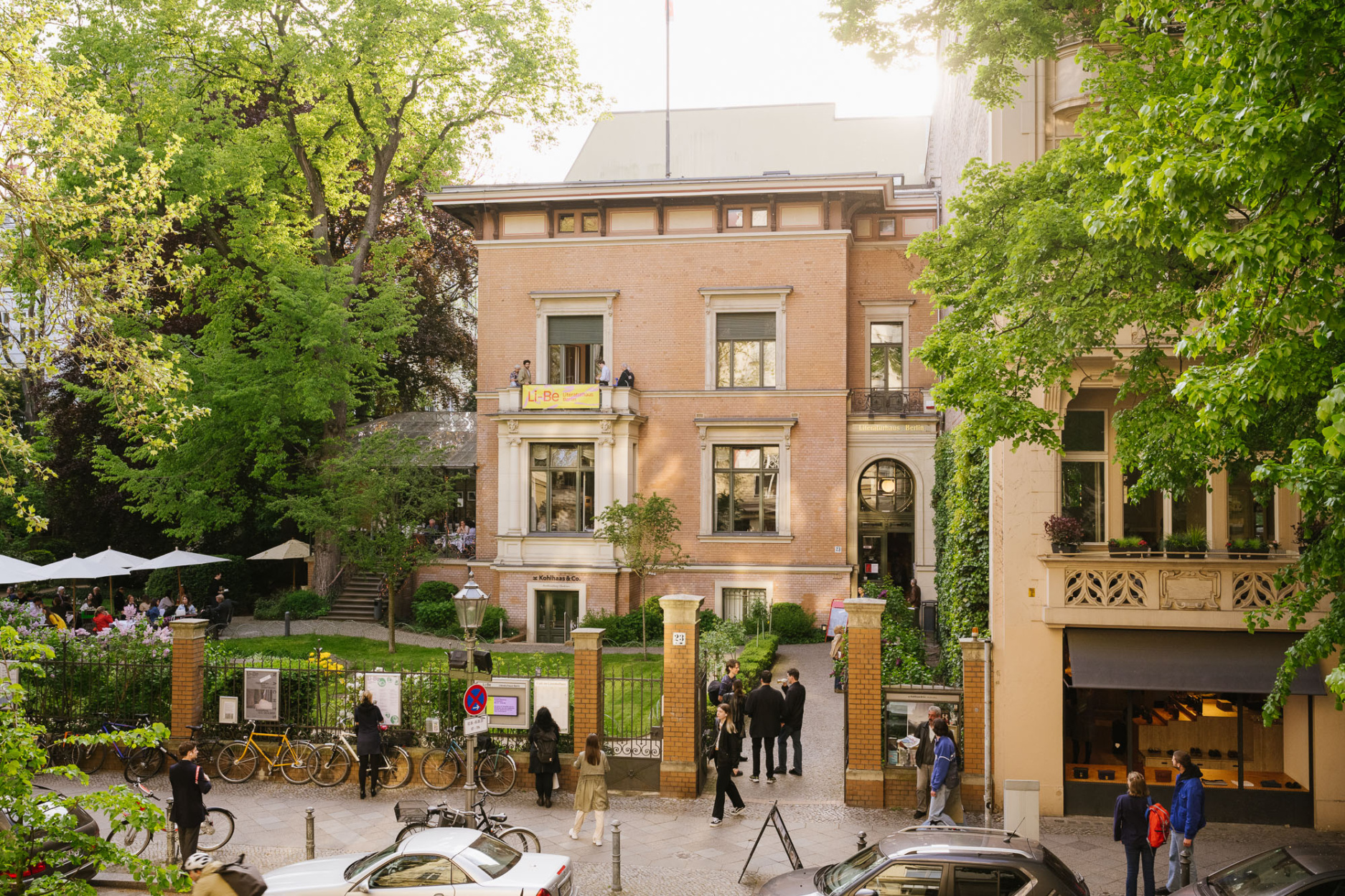
In 1889, Louise, the daughter of a wealthy industrialist from Magdeburg, Hermann Gruson, married Richard Hildebrandt. Richard was a corvette captain who had taken part in the first two German expeditions to the North Pole and would later become deputy mayor of Charlottenburg. Gruson gifted the couple a neoclassical house inspired by suburban Italian villas as a wedding present. The house was located in Fasanenstraße, a largely undeveloped street just a stone’s throw from Kurfürstendamm.
The property – a detached house set back considerably from the street and boasting a spacious garden – soon witnessed the growth of Berlin and the city’s population boom. Construction space was scare and had to be used more intensively. Fasanenstraße 22, the neighbouring building, was thus constructed as an apartment block building rather than as a detached house, just like most other houses in the area that were built after it.
Richard and Louise Hildebrandt, who remained childless, moved into the villa in November 1890. The couple had a large circle of friends and family, and the house developed a reputation for being open and hospitable. Visitors included officers, admirals, scientists and artists. Close friendships blossomed between the Hildebrandts and the sculptor Johannes Götz, the composer Max Bruch – who is said to have played his famous Violin Concerto No. 1 in the villa – and the majestic court actress Auguste Taglioni.
Richard Hildebrandt died in Baden-Baden in 1911. Louise went on to run a military hospital in their house during the first years of the World War I before dying in 1916. The couple’s tomb, designed by Fritz Klimsch, is maintained to this day in the Luisenfriedhof III cemetery at Fürstenbrunner Weg 65.
1918–1953
The Humboldt House and the German Red Cross Home
The heirs auctioned off the building, its contents and the land, and in 1918, the department store chain Wertheim acquired the property. Wertheim planned to demolish all buildings between Fasanenstraße and the parallel street, Uhlandstrasse, to make way for a new department store. When the plan did not come to fruition, Wertheim rented the house to the German Red Cross.
Between November 1927 and December 1930, the Alexander von Humboldt Foundation, responsible for international students in Berlin, used the building as its administrative headquarters. It set up a reading nook with international newspapers and provided students with affordable meals as well as a space for cultural events. Pierre Bertaux, a German scholar from France who later became famous, was the very first French exchange student in 1927. He often described the house in detail in letters to his parents. In November 1927, he wrote:
»Then I went to the Humboldt Foundations. I spoke to the secretary. Dr. Göpel (that’s his name) wasn’t there, but the managing director, Dr. Zimmermann, was and he apparently wanted to speak to me. I was surprised to see a young man of around 30 years, who very kindly explained how it all works. The Ministry of Foreign Affairs pays, and I found out that Dr. Zimmermann himself works at the Ministry. So he’s sitting at the source, as it were. He was very friendly and showed me the rooms. There was a reception room, salons, a club room with newspapers, a restaurant (where I ate two excellent eggs), etc. My only obligation is to collect my money at the beginning of every month, and that’s it. But he advised me to participate in group work’, which means I’ll come here sometimes. If I want to, I can eat lunch and dinner for 80 pfennigs.”
Student associations were also welcome in the house. The »Islamia«, a group of Islamic students, and the »El Arabiya«, an association of Arabic students, had their headquarters there. The »Islam Institute«, which described itself as »a scientific enterprise of purely Islamic provenance«, celebrated its inaugural event in the rooms of the Humboldt House in the autumn of 1927. Russian students, most notably the medievalist and poet Raissa Bloch and the poet Michail Gorlin, both of whom were born in St. Petersburg, organised the cultural event series »Na Tscherdakje« (eng: in the attic) from autumn 1927 onward. The third of these evenings, which took place on November 13th, 1927, was particularly memorable, as Vladimir Nabokov, aka Sirin and Lew Nussimbaum, aka Essad Bey, recited their poems and oriental fairy tale retellings. Another notable event was the visit of Thomas Mann on 7th December 1927; he had been invited by the international student body to read from his as yet unpublished novel »Felix Krull«.
Even after the Humboldt Foundation moved out of the building, the house continued to be used for literary events. »Die Rabenpresse«, a small book-loving publishing house founded by V.O. Stomps, hosted readings in its large hall (Großer Saal) from 1932 onward. These featured authors such as Max Hermann-Neiße, Asta Südhaus, Hermann Kasack, Werner Bergengruen, Paul Zech and Oskar Loerke.
From 1934, the house was used by the German Red Cross as a rest and recovery home for men. The building survived the war almost entirely unscathed. In the first months after the war, it served as a soup kitchen, and from the end of the 1940s onward, it was used as a refugee home housing 200 people.
1954–1983
Manja Chmiél, Dolce Vita, Wintergarten
After the Marienfelde Refugee Centre was established, smaller refugee homes in the west of Berlin were closed, including the one temporarily housed in Fasanenstraße 23. The German Red Cross moved out, and the house saw a procession of tenants. Manja Chmiél – a student of Mary Wigman, who founded a dance studio known as »The New Dance Group« on the first floor – was one of them. During her time there, the rooms were mainly used for dance classes. Occasionally, they were opened to the public for shows, such as on December 1962 when the studio celebrated its opening. It was forced to close as early as 1965 due to a lack of support from the Senate.
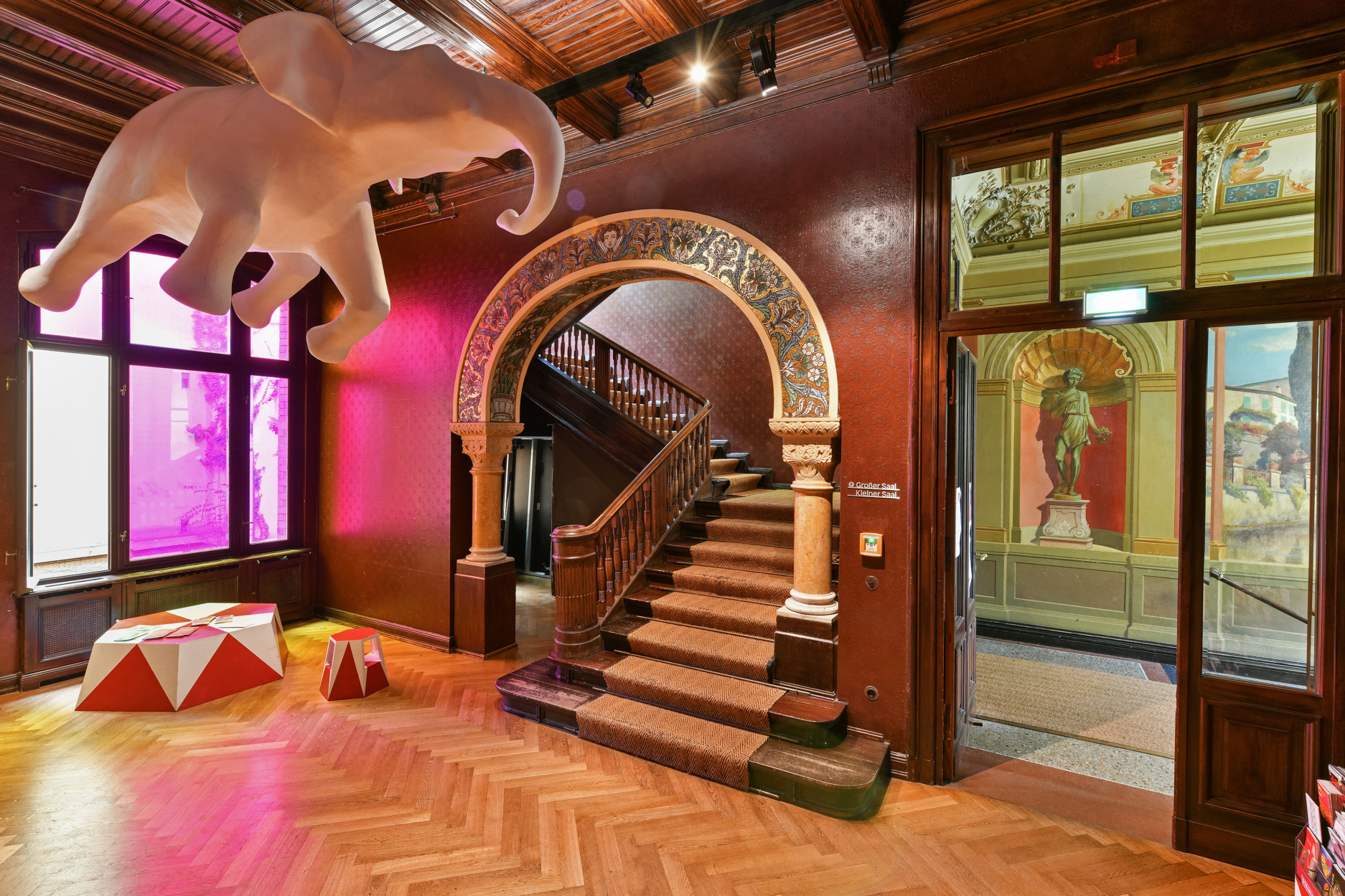
A host of bars then moved in to – and back out of – the space that today houses the café and restaurant, including the nightclub »Dolce Vita« in May 1965. The owner had the bizarre idea of using a young elephant called Berolina for its shows. Kept in poor conditions in the cellar of the house, the elephant died of bronchitis and pneumonia. The BZ newspaper reported the death under the headline »Baby Elephant Dies in Nightclub«. Today, a white elephant created by artist Marc Bausback hanging in the foyer of the Literaturhaus Berlin commemorates Berolina.
The author Franz Tumler lived near the house and witnessed its frequent changing of hands in the 1950s and 60s. He left behind a poignant account in a text entitled »Demnächst ein neuer Name« (eng: a new name soon):
»One day, a show horse was unloaded just outside the porch. On the following day, it grazed on the lawn in front of the villa where the Red Cross used to be. It belonged to a young woman who was performing a show with her horse for three weeks in an establishment on Kurfürstendamm. Her performance was at midnight when, shedding sequins and illuminated by the dusty pool of a spotlight, she’d ride the soft, patient animal. At six in the evening, however, she’d sit in a white blouse at our table with her grey eyes and beautiful hair, a cool conversational curiosity simmering just beneath her skin. That, too, was part of her job. Everything about her was deliberate and well-rehearsed.«
Several other establishments, among them the Café-Restaurant Wintergarten (1973–78), tried their luck in the villa. During this time, the building was also rented out as apartments and its garden, extensively paved, was used as a carpark. For a while, a small sausage stand stood on the grounds.
1984–1986
Threat of Demolition, Heritage Protection, and the Founding of Literaturhaus Berlin
In the mid-1980s, a study commissioned by the Senate was published entitled ‘Report on the State of Literature in Berlin’, which stated that literature received funding amounting to just 0.5 per cent (i.e. 1.4 million marks, as at 1983) of the culture budget. The then Senator for Culture, Volker Hassemer, concluded that ‘the field of literature, which has been neglected for far too long, should be better supported.’ The idea of creating a central venue for promoting literature and engaging with the public was very quickly linked to the building at Fasanenstraße 23, which had just been acquired by the Berlin Senate. In 1984, a sponsoring association was founded, comprising Berlin-based authors’ associations and literary societies. The Senate entrusted the administration of the building to this association. The association appointed the literary scholar and critic Herbert Wiesner as its first director. From 1984 onwards, the building underwent extensive renovation and was adapted to meet the requirements of its future use.
1986–2017
»an entire house dedicated to literature«
In June 1986, the Literaturhaus Berlin opened its doors to the public for the first time. It was clear from the very first day that the term ‘literature’ was interpreted more broadly here. One panel discussion was entitled ‘Football and Literature’. Alongside the traditional book presentations by national and international writers, a platform was also provided for the genres of theatre, film and radio drama. In August 1986, the first full-length theatre evening took place: authors explored Shakespeare’s *A Midsummer Night’s Dream* through short dramatic pieces. New radio plays were regularly premiered at the venue. Two projectors enabled professional film screenings. The literary exhibition ‘Industriegebiet der Intelligenz’ (Industrial Estate of the Intellect) introduced another form of literary outreach. This exhibition, along with numerous subsequent ones, brought the Literaturhaus Berlin recognition far beyond the city’s borders. Herbert Wiesner ran the Literaturhaus Berlin until 2003, after which Ernest Wichner – an author, translator and editor originally from the Banat region – took over as director.
1986–today
Janika Gelinek and Sonja Longolius took over the house as co-directors in 2018. From the very beginning, their aim was to open up the villa – which is over a century old – as a venue for literary outreach, to attract new audiences and to bring its history, including the building’s varied and fascinating past, to life. This led not only to the founding of the ‘Junges Literaturhaus’ , with events for children and young people, but also to the trialling of new event formats: 24-hour readings, brown bag lunches, tea time, events in the garden, on the terrace and on the balcony, major festivals and multilingual staged readings. The rooms and the display case by the fence were opened up to the arts, whilst during the COVID-19 pandemic the house consistently embraced the digital realm: since then, almost all of the events have been professionally streamed free of charge on the Literature Channel (www.literaturkanal.tv) – a reflection of its ongoing commitment to accessibility.
Publication
Sebastian Januszewski’s book »Fasanenstraße 23. Geschichte. Spaziergänge. Literatur« (eng: History. Walks. Literature) explores the history of the house. You can find out more about the book here.
Tours
We give regular tours in and around the Literaturhaus Berlin. Tour dates can be found in the program.